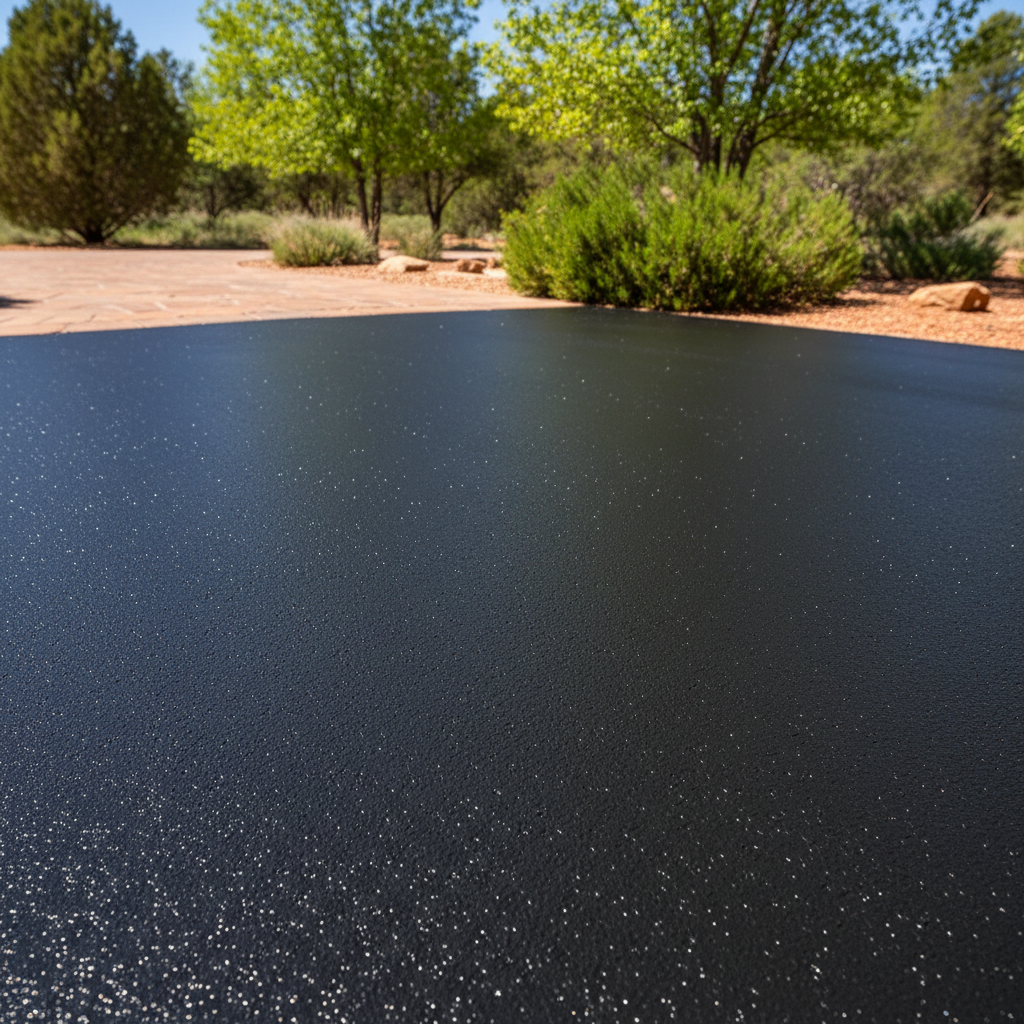
What exactly is sealcoating, and why do I even need it?
Alright, let's cut right to it. Sealcoating is basically a protective layer we put over your asphalt driveway or parking lot. Think of it like sunscreen for your pavement, or a fresh coat of paint on your house. It's a liquid, usually a coal tar emulsion or an asphalt emulsion, that we apply in one or two thin coats. It fills in tiny surface voids, seals small cracks, and creates a barrier against the elements.
Why do you need it? Well, your asphalt is constantly battling the sun's UV rays, which break down the binder that holds the aggregate together. Then there's water, oil, gas, and all the chemicals that drip from cars. Here in Flagstaff, we've got that brutal freeze-thaw cycle every winter, which is a real killer for pavement. Water gets into tiny cracks, freezes, expands, and then thaws, leaving bigger cracks. Sealcoating helps prevent that whole process by keeping those damaging elements out and slowing down the oxidation that makes your asphalt brittle and faded. It keeps your driveway looking good and lasting longer, plain and simple.
How often should I have my driveway sealcoated in Flagstaff?
This is a big one, and it depends on a few things. Generally, for a residential driveway, I tell folks every 2 to 3 years is a good sweet spot. If you've got a brand new driveway, you'll want to wait about 6-12 months for the asphalt to fully cure before the first sealcoat. After that, it's about maintenance.
Now, if your driveway sees a lot of heavy traffic, or if it's constantly exposed to harsh sunlight all day long, you might lean towards that 2-year mark. If it's a shadier spot, or you don't use it much, you might stretch it to 3 years. The key is to watch for signs of wear: fading, small cracks starting to form, or the surface looking dry and brittle. Don't wait until it's falling apart; sealcoating is preventive, not a miracle cure for a neglected driveway.
What's the best time of year to sealcoat in Flagstaff?
Timing is everything, especially with our weather up here. You need consistent warm temperatures for the sealcoat to cure properly. That means we're typically looking at late spring, summer, and early fall — roughly May through October. We need daytime temperatures to be consistently above 50°F (10°C) and no rain in the forecast for at least 24-48 hours after application. Ideally, you want a few days of good weather.
Trying to sealcoat when it's too cold, or if rain is coming, is just asking for trouble. The material won't adhere right, it won't cure properly, and you'll end up with a job that doesn't last. We're always keeping an eye on the forecast to make sure we pick the perfect window for your project.
Can sealcoating fix existing cracks and potholes?
No, not really. This is a common misunderstanding. Sealcoating is a surface treatment; it's not a structural repair. Think of it like painting over a hole in your wall — it doesn't fix the hole, it just covers it up for a minute. If you've got cracks, especially anything wider than a quarter-inch, or potholes, those need to be repaired *before* we apply any sealcoat.
We'll clean out the cracks, fill them with a hot rubberized crack filler, and patch any potholes with fresh asphalt. Then, once those repairs have settled, we can come in with the sealcoat. The sealcoat will then protect those repairs and the rest of your driveway. Trying to sealcoat over significant damage is a waste of money because the cracks will just reappear right through the sealcoat, and potholes will still be potholes.
How long does it take for sealcoat to dry, and when can I drive on it?
You're always eager to get back to normal, I get it. Typically, a sealcoated driveway will be dry to the touch within 4-8 hours, depending on temperature, humidity, and how much sun it's getting. But